
BFRP Rebar vs Steel: Why Basalt Fiber Wins in Harsh Saudi Environments
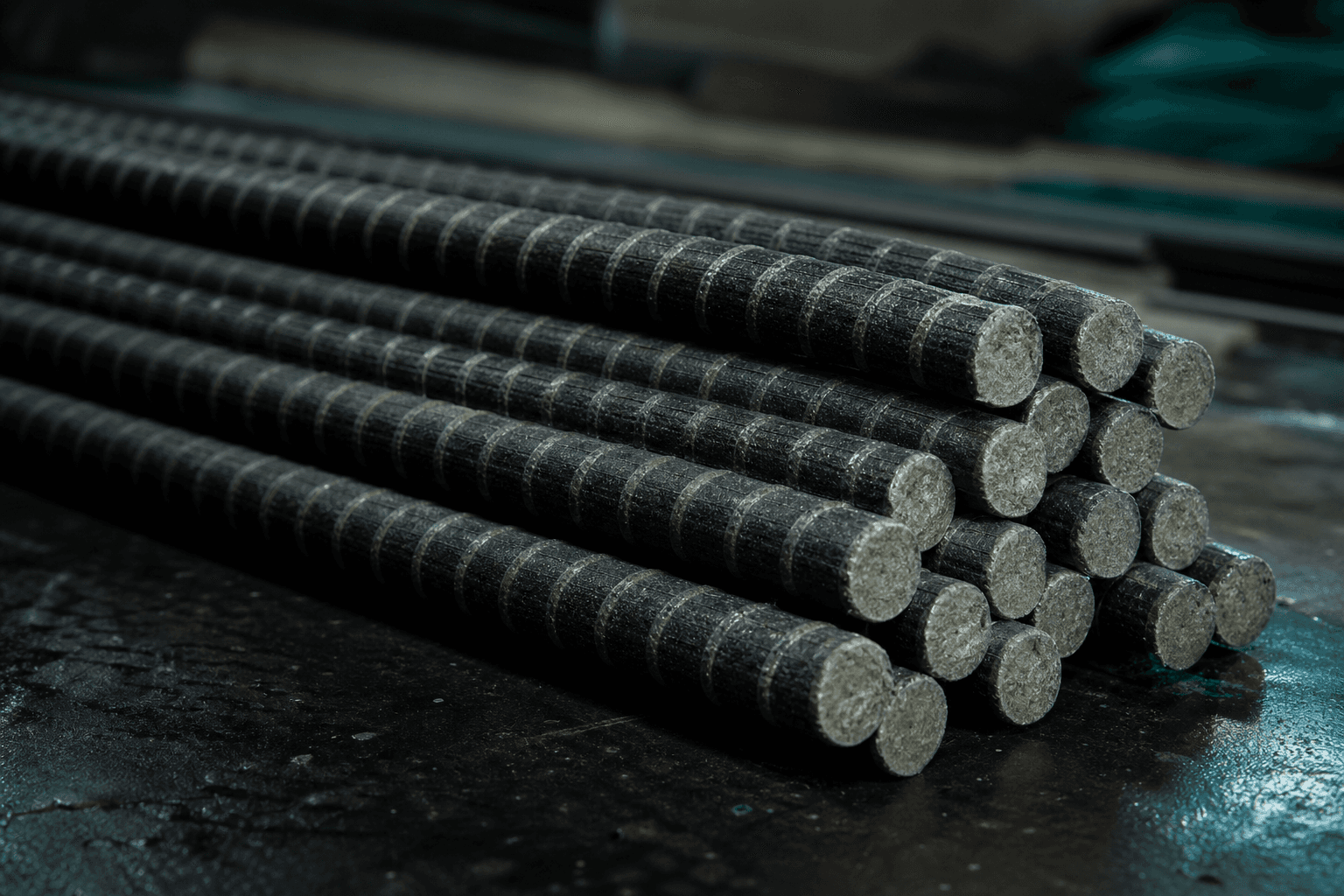
Saudi Arabia's construction environment presents extreme challenges: temperatures regularly exceeding 50°C, coastal saltwater exposure, high alkalinity from desert soils, and the constant thermal cycling that accelerates corrosion. Conventional steel rebar — the backbone of reinforced concrete for over a century — struggles in these conditions, leading to premature structural failure and enormous maintenance costs.
Basalt Fiber Reinforced Polymer (BFRP) rebar offers a compelling alternative. Produced by pulling continuous basalt fibers through an epoxy resin bath and die — a process called pultrusion — BFRP bars deliver tensile strength between 1,200 and 1,400 MPa, compared to approximately 500 MPa for Grade 60 steel. At roughly one-fifth the weight and with zero corrosion potential, BFRP eliminates the primary failure mechanism of reinforced concrete structures in Saudi Arabia.
In chemical resistance testing, BFRP retains over 90% of its strength after 1,000 hours in alkaline solution (pH 13) at 60°C — conditions that would cause significant degradation in glass fiber alternatives and are far more aggressive than field conditions. The material is also non-conductive, non-magnetic, and thermally stable from −260°C to +700°C.
For infrastructure projects like the NEOM highway network, Red Sea coastal structures, and industrial facilities in the Eastern Province, BFRP rebar is not just a material upgrade — it is a structural life-extension strategy. Initial material cost parity with steel, combined with a projected 70–100 year service life versus 25–40 years for steel-reinforced concrete in similar environments, makes the economic case compelling.