
Temperature Resistance of Basalt Fiber: From −260°C to +700°C
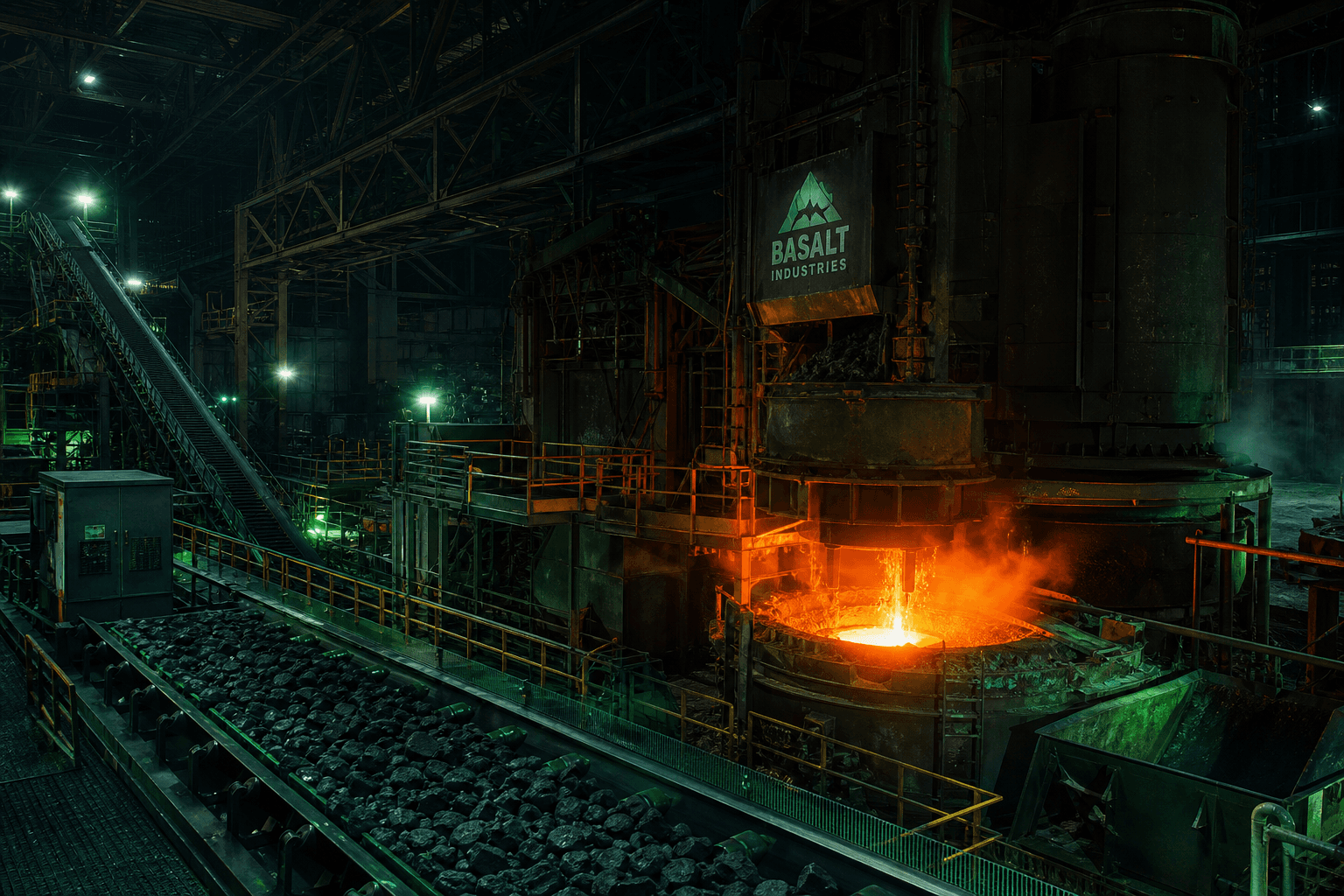
Basalt fiber's thermal performance stems directly from its geological origin. Formed from volcanic magma that cooled over millennia, basalt rock has already been subjected to extreme heat — and retains its crystalline structure through temperatures that would melt most synthetic materials. When drawn into continuous fibers at 1,400–1,500°C, this thermal history is encoded into every filament.
In practical terms, continuous basalt fiber maintains its mechanical properties through a range of −260°C to +700°C — a span wider than any commercially available glass or aramid fiber. At cryogenic temperatures, basalt fiber retains flexibility and strength without becoming brittle. At elevated temperatures, it resists deformation and maintains tensile integrity up to approximately 650°C, beyond which gradual softening occurs.
For Saudi industrial applications, the upper thermal range is most relevant. Petrochemical plant insulation, oil and gas pipeline wrapping, industrial furnace components, and fire protection systems all benefit from materials that perform at elevated temperatures without toxic off-gassing. Unlike organic fiber composites, basalt fiber does not produce toxic fumes at high temperatures — a critical safety advantage.
In the context of Saudi Arabia's extreme ambient temperatures — where road surfaces can reach 70°C in summer, and industrial facility walls may experience even higher temperatures — the thermal stability of basalt fiber composites translates directly to structural longevity. BFRP reinforcement in infrastructure exposed to direct solar radiation performs significantly better than steel, which undergoes thermal expansion and accelerated corrosion at elevated temperatures.
Basalt Co.'s product testing program, to be conducted at our ISO 17025-accredited quality laboratory upon factory commissioning, will include thermal cycling tests across the full operational range, fire resistance certification, and long-term thermal aging studies to quantify service life under Saudi field conditions.